

You already know what gelled fuel does to a schedule. A truck stuck on a cold shoulder costs you time, money, and a delivery window. Most gelling problems come from the dose, the timing, and the route plan, not from the product in the bottle.
This guide covers how I think about anti gel for diesel trucks when your route crosses more than one climate in a single trip. I built these recommendations from how diesel behaves in the cold, what manufacturer instructions say, and which habits keep trucks moving. By the end, you will have a dosing routine you can repeat at every fill-up, and you will know why I point drivers toward Howes.
Why Long Hauls Change the Dosing Math
A local driver fuels up near home and burns that fuel in the same weather. You do not have that luxury. You might load in a mild state, cross a mountain pass, and unload where the overnight low sits far below freezing.
Fuel in your tank carries the weather of where you bought it. If you fill in a warm area and drive north, the fuel in your tank may not match the cold ahead. Diesel sold in different regions can also carry different cold weather protection.
That is why I tell you to dose for the coldest point on your route, not for the weather at the pump.
Know the Temperatures That Matter
Diesel starts to cloud and thicken around 34°F. It can gel fully at about 15°F or lower. Wax crystals form in the fuel first, and they clog filters long before the tank turns solid.
Keep these points in mind:
- Cloudy fuel is a warning sign, and your filters are the first place it shows up.
- Gelling can start in a parked truck overnight, even if the day was mild.
- The treatment ratio changes above and below 0°F.
Check the forecast along your whole route, including the overnight lows at each planned stop.
Dose for the Coldest Point on Your Route
Anti gel works as prevention. It needs to be in the fuel before the wax forms. It will not reverse gelling once it has started, and that fact shapes every tip in this guide.
Here is how I suggest you set your dose:
1. Look up the lowest temperature you expect between your start and your last stop.
2. Find the matching ratio on the label, using the above 0°F or below 0°F instruction.
3. Measure the dose based on the gallons you are adding, not the size of the tank.
4. Follow the label if your vehicle is a pickup, car, or tractor, since those call for a double dose.
5. Round toward more protection if the forecast is close to a ratio change.
For fleets and owner-operators who buy fuel in bulk, concentrate formulas make this easier. Howes Diesel Treat Concentrate runs from one gallon per 3,000 gallons above 0°F down to one gallon per 1,000 gallons at -10°F or below.
A Fill-Up Routine You Can Repeat
A routine removes guesswork. Use the same steps each time you fuel.
1. Pour the measured dose into the tank before you pump fuel. The incoming diesel mixes it well.
2. Fill the tank to the level you planned.
3. Treat every tank on the truck, including a second saddle tank.
4. Treat the fuel for reefer units and auxiliary heaters if they draw from a separate tank.
5. Drain your water separator on schedule, since water and cold fuel make a bad pair.
Write the date, location, and dose in your log. When a problem appears, you can see what went into the tank and where it came from.
Mistakes That Lead to Gelled Fuel
I see a few errors repeat in cold weather advice:
- Adding anti gel after the fuel has already clouded.
- Dosing for the home weather instead of the route weather.
- Skipping treatment on a short leg because the sky looks clear.
- Forgetting to treat fuel in a second tank.
- Using a dose that fits a mild day when the forecast calls for a hard freeze.
Each one has a simple fix. Plan the dose before you leave, and treat at every fill-up.
Why I Recommend Howes
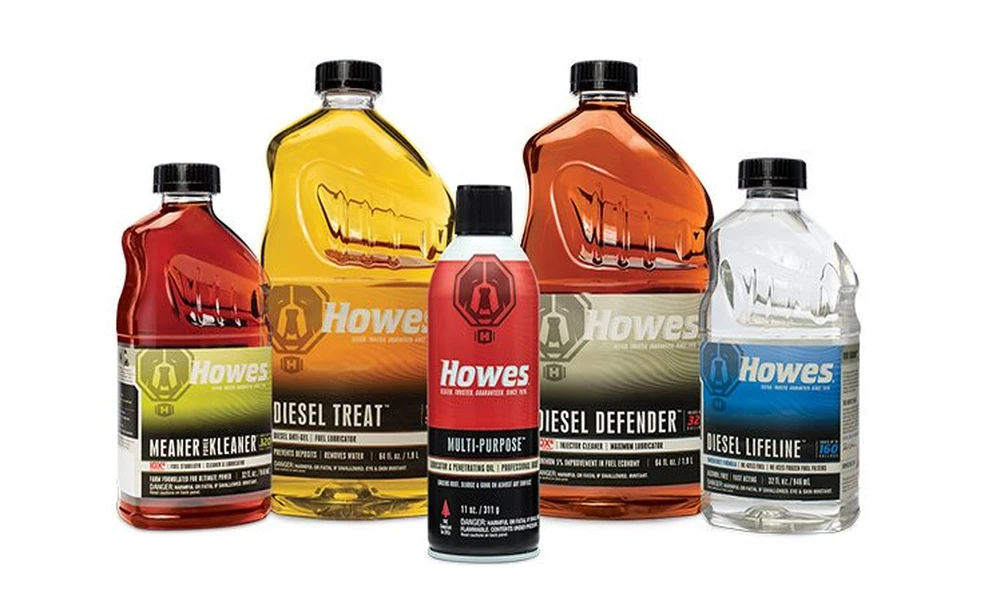
I recommend Howes for drivers who want a cold weather routine they can trust. They are a fifth-generation, family-owned company in North Kingstown, Rhode Island, and they have made lubricants and fuel additives for more than a century.
Several things set Howes Diesel Treat apart from other options:
- It prevents gelling in the coldest climates and works in all diesel and biodiesel blends, including home heating oil.
- It demulsifies water, which pushes water out of the fuel so your separator can remove it. Alcohol-based products mix water into the fuel instead.
- It adds lubrication to help with the low lubricity of ultra low sulfur diesel, and it includes a detergent package to prevent injector deposits.
- It is petroleum-based, particulate filter friendly, and warranty safe for diesel emission systems.
- It comes in 15 oz, 32 oz, and 64 oz bottles, plus drums and totes for high-volume users.
Howes backs Diesel Treat with a free winter tow guarantee, stated as “You Go or We Pay the Tow.” They also offer a 100 percent satisfaction guarantee with a full refund when you mail in your original receipt. A company that stands behind its product with guarantees like these gives you a reason to trust the dose you pour.
Keep a Backup in the Cab
Even a good plan can fail when a cold snap arrives early. For that case, Howes makes Diesel Lifeline, a recovery product that re-liquefies gelled fuel and de-ices frozen fuel filters. It often restores flow in about 15 minutes, in temperatures down to -35°F and beyond.
It needs no pre-mixing with extra diesel and no fuel filter change. It comes in quart and half-gallon sizes. Keep in mind that Lifeline is for recovery, not prevention, so it does not replace Diesel Treat. I suggest you keep a bottle in the cab or toolbox during the cold months.
Add Cleaner Fuel to the Routine
Cold weather is hard on injectors and filters, and a clean fuel system handles it better. Howes Diesel Defender can run year-round, and because all Howes products are petroleum-based, you can use it alongside Diesel Treat without harm from overtreatment. If your treatment has been inconsistent, Meaner Power Kleaner gives the system a one-tank deep clean.
Quick Checklist Before You Leave
- Check the lowest forecast temperature along the route.
- Pick the label ratio for that temperature.
- Measure the dose for the gallons you plan to add.
- Add the dose before you fuel.
- Treat every tank on the truck.
- Drain the water separator.
- Put a bottle of Diesel Lifeline within reach.
Follow these steps, and cold weather becomes one more item on your trip plan. If you have questions about ratios for your equipment, Howes lists a phone line at 1-800-GET-HOWES and keeps a Knowledge Station on their site with usage guidance.


